Local AI
for Artists
A local creative pipeline.
I use generative AI as a modular production layer rather than a single prompt-to-output service.
Qwen3.8 runs locally through llama.cpp and connects to Unreal Engine 5.8 via VibeUE and MCP. ComfyUI orchestrates Qwen-Image and MiniMax H3 for image generation, editing and video, while TRELLIS.2, NVIDIA ARDY and Qwen3-TTS extend the pipeline into 3D, motion and voice.
AI Toolkit supports project-specific training, and DeepSeek Harness handles scripts and repetitive production tasks. The outputs return to CGI, compositing, editing and real-time tools for selection, correction and final art direction.
AI becomes useful to artists when it stops being a destination and starts behaving like material.
The tools I actually use.
The stack grouped by how the tools work together.
Qwen3.8 + llama.cpp + VibeUE + DeepSeek Harness
Local reasoning / coding
Qwen3.8 runs locally through llama.cpp; DeepSeek Harness handles reasoning, coding and terminal-side automation, while VibeUE connects the same agent workflow to Unreal Engine 5.8 through MCP.
ComfyUI + Qwen-Image + MiniMax H3 + TRELLIS.2
Image / video / 3D production
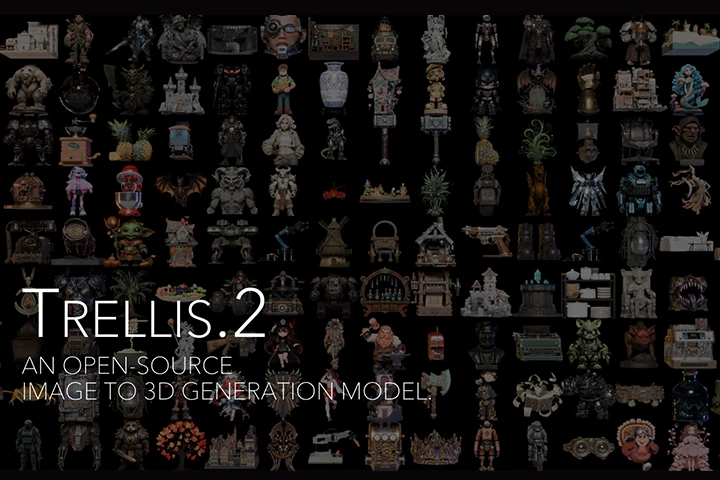
ComfyUI is the node-based production layer connecting Qwen-Image for generation and editing, MiniMax H3 for multimodal video, and TRELLIS.2 for image-to-3D assets.
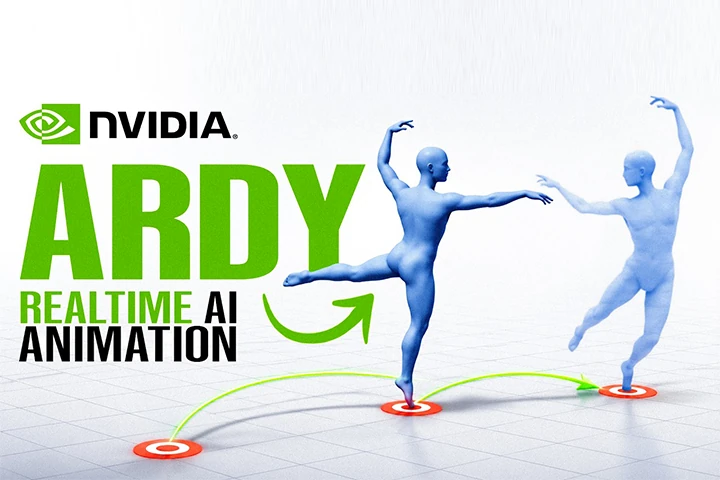
ARDY
Interactive motion generation
Real-time human motion generation from text and kinematic constraints.
Pinokio + Qwen3-TTS + AI Toolkit
Local apps / voice / training
Pinokio manages local AI applications, Qwen3-TTS handles multilingual speech and voice design, and AI Toolkit provides LoRA training and model adaptation.